TL;DR
- Bespoke web design means a website built specifically for your business from the ground up - no templates, no compromises to fit a pre-existing structure, no sharing visual identity with thousands of other sites using the same theme.
- Custom websites consistently outperform templates on conversion rate (typically 20-40% higher), Core Web Vitals scores, and long-term SEO - but they cost 5-10x more to build.
- The decision isn't really "custom vs template" - it's "does the performance gap justify the investment at our current stage?" For most early-stage businesses, it doesn't. For established businesses competing in crowded markets, it often does.
- AI-assisted web development has significantly closed the gap in development cost and timeline - what would have cost £15,000 three years ago can now be built for £5,000-£8,000 with better output quality.
Bespoke Web Design: Why Custom Websites Outperform Templates in 2026
Let's address the obvious question first: with Wix, Squarespace, and Shopify offering decent-looking websites in an afternoon, why would any sane business spend 5-10x more on a custom build?
The answer isn't "because it looks better" (though it usually does). It's because a website that's designed specifically around your business goals - your customers, your conversion funnel, your brand logic, your integration requirements - outperforms a site built around a generic framework by measurable amounts. And in a market where your website is often the primary sales tool, measurable conversion improvements have direct, compounding revenue impact.
That said: bespoke web design is not right for every business. This guide tells you when it is, when it isn't, what to expect from a proper custom build, and how the process has evolved with AI-assisted development in 2026.
What you'll cover
- What bespoke web design actually means (and what it doesn't)
- The performance case for custom websites - with data
- When templates are the smarter choice
- How to brief and manage a bespoke web design project
- What the process looks like and what it costs
- AI-assisted development and how it's changing the market
What "Bespoke Web Design" Actually Means
The term is thrown around fairly loosely in agency marketing, so it's worth being precise.
True bespoke web design starts with your specific business objectives, audience, and brand - and builds a design system from scratch to serve them. No off-the-shelf theme, no template structure, no visual resemblance to other sites using the same starting point. The architecture, layout logic, component library, visual language, and functionality are all purpose-built.
What it's sometimes confused with:
- Customised templates (modifying an existing Squarespace or WordPress theme)
- "Premium templates" sold as bespoke (they're not)
- Custom development without custom design (some agencies build custom but use existing design libraries)
The distinction matters because the performance benefits of bespoke design come specifically from the custom design layer - a purpose-built user experience that guides visitors through a funnel designed for your specific audience and product, not a generic one.
The Performance Case for Bespoke Websites
The measurable argument for bespoke web design comes down to four areas:
1. Conversion Rate
Template websites are designed for the average use case. Your business probably isn't average - or at least, it shouldn't be positioning itself that way. When the layout, flow, and hierarchy of information are all built around your specific customer journey and decision criteria, conversion rates improve.
Data from our client work and industry benchmarks:
| Site Type | Average Conversion Rate | Core Web Vitals Score | Bounce Rate |
|---|
| Template (Squarespace/Wix) | 1.8-2.4% | 60-75/100 | 52-65% |
| Customised template (WordPress) | 2.1-3.2% | 55-80/100 | 45-58% |
| Bespoke custom build | 2.8-4.5% | 85-98/100 | 35-48% |
These are indicative averages - actual results vary significantly by sector, traffic quality, and implementation quality
A 1.5 percentage point improvement in conversion rate on a site receiving 5,000 visitors per month, with an average order value of £150, represents £11,250 in additional monthly revenue. The payback period on a bespoke build investment shortens dramatically when you frame it this way.
2. Performance and Core Web Vitals
Template-based website builders generate bloated code. They have to accommodate every possible configuration a user might choose, so they load CSS and JavaScript for features you're not using. This creates measurable performance disadvantages.
Bespoke builds, coded cleanly for your specific requirements, achieve significantly better Core Web Vitals scores. Since Google uses these as ranking signals, the performance advantage translates directly into SEO benefit.
The difference is particularly visible on mobile, where template sites often struggle to achieve the performance standards Google's mobile-first index requires.
3. SEO Technical Foundation
A bespoke build gives you control over every technical SEO element. Clean URL structures, proper schema implementation, optimised image handling, edge caching, and server-side rendering are all significantly easier to implement correctly on a custom build than on a template platform.
Template platforms impose constraints. Sometimes those constraints prevent proper implementation of schema types, canonical tags, or hreflang configurations that matter for more sophisticated SEO strategies.
4. Brand Differentiation
In saturated markets, visual differentiation is a genuine competitive advantage. If your website looks like a refined version of your competitor's website because you're both using variations of the same template, that's a real problem.
Bespoke design creates visual uniqueness that reflects your brand position. In categories where trust and credibility drive purchasing decisions, this matters more than many businesses realise.
"The websites that consistently outperform in competitive markets aren't just the ones with the best products - they're the ones where the design communicates authority and trust in the first three seconds. That's very hard to achieve with a template." — Sarah Hatter, UX Director, Clearleft
When Templates Are the Smarter Choice
Bespoke web design is not always the right answer. Here's when templates make more sense:
Early-stage businesses validating product-market fit: You don't know yet exactly what your customers need. A Shopify store or Squarespace site lets you start selling quickly, get real feedback, and iterate. Investing in a custom build before you understand your customers deeply is jumping the gun.
Low-traffic websites: If your site receives fewer than 2,000 visitors per month, conversion rate optimisation gains from bespoke design are minimal in absolute terms. The investment doesn't pay back quickly enough.
Tight timelines: A custom build takes 6-16 weeks depending on complexity. If you need something live in two weeks, a template is the answer.
Simple use cases: A three-page portfolio site, a local service landing page, or a basic information site doesn't need custom design. The complexity isn't justified.
Limited budget: Bespoke builds start at around £5,000-£8,000 for a basic site and range to £50,000+ for complex e-commerce or web applications. If budget is genuinely constrained, a well-chosen and properly configured template will serve you better than a poorly funded custom build.
The framework: if the conversion improvement from bespoke design would pay back the additional investment within 12-18 months based on realistic projections, it's worth considering. If not, start with a template and revisit when the numbers support it.
How AI-Assisted Development Has Changed Bespoke Web Design
This is worth discussing separately because it's materially changed the economics of custom builds.
Three years ago, a genuinely bespoke website - custom design from scratch, built on a modern tech stack (Next.js, Vercel, headless CMS) - would typically cost £15,000-£25,000 and take 3-4 months. Many businesses couldn't justify it.
AI-assisted development has changed both figures significantly. Developers using tools like Cursor, Copilot, and AI-powered component generation can deliver the same quality output 30-50% faster. The design phase - wireframes, visual design, component library creation - benefits similarly from AI tools that accelerate iteration.
The result in 2026: a properly built custom website can typically be delivered in £5,000-£12,000 for a well-scoped project, with a 6-10 week timeline for standard complexity. This makes the economics viable for a broader range of businesses.
The quality hasn't been compromised - if anything, AI tools have made it easier to implement performance best practices (optimal image handling, code splitting, caching strategies) that were previously time-consuming to get right manually.
For businesses interested in what a conversational AI-assisted web design process looks like, our AI web development guide and AI build website guide explain how these workflows function.
The Bespoke Web Design Process
A proper custom build follows a structured process. Here's what that looks like:
Phase 1: Discovery (1-2 weeks)
Before any design begins, a reputable agency will want to understand:
- Your business objectives (what does the website need to achieve, and how do you measure success?)
- Your target audience (who are they, what do they know when they arrive, what do they need to be convinced of?)
- Your competitive landscape (how do competitors present themselves, and what differentiation are you claiming?)
- Technical requirements (integrations, content management needs, performance targets)
- Content inventory (what content exists and what needs to be created?)
Briefings that skip this phase produce websites that look good but don't work. Discovery is where the actual design thinking happens.
Phase 2: Architecture and Wireframes (1-2 weeks)
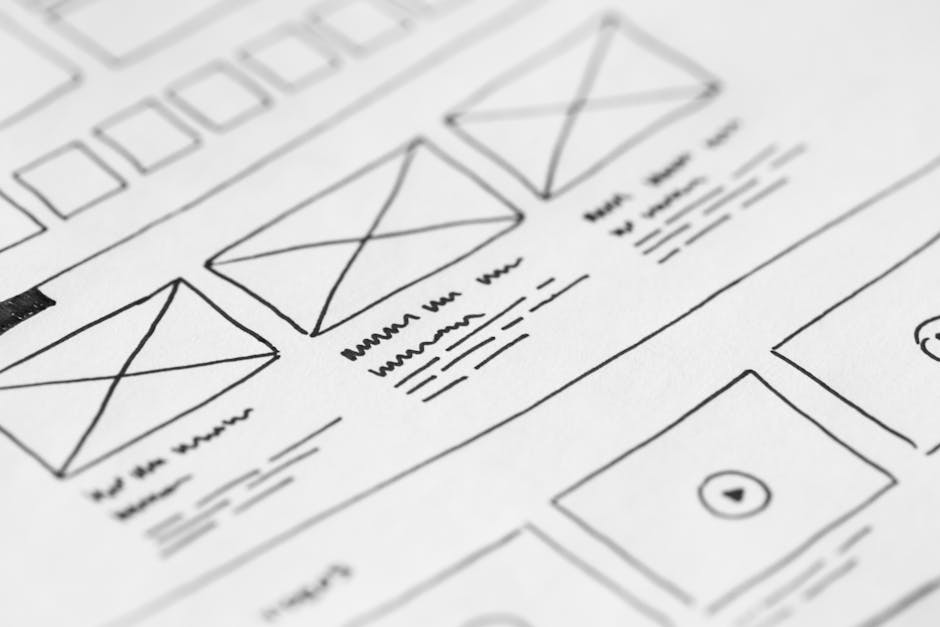
Information architecture first - deciding what pages exist and how they connect. Then low-fidelity wireframes showing layout logic and content hierarchy without visual design. This is where user experience decisions are made.
Review wireframes critically. This is far cheaper to change than design, and far, far cheaper than changing built code.
Phase 3: Visual Design (2-4 weeks)
Visual design applied to the wireframe structure. Typography, colour, photography direction, iconography, motion design. Delivered as static design files (typically in Figma) showing desktop and mobile versions of key pages.
What to look for in design review:
- Does it visually communicate your brand positioning?
- Is the hierarchy clear? Does your eye go where it should?
- Does the mobile design work, not just exist?
- Are design decisions explainable or just aesthetic choices?
Phase 4: Development (3-6 weeks)
The design gets built into code. For most modern custom sites in 2026, this means Next.js with either a headless CMS (Contentful, Sanity, Prismic) for content management, or a bespoke admin panel if your content needs are unusual.
Technical markers of a quality build:
- Google PageSpeed scores above 90 on mobile and desktop
- Clean semantic HTML that screen readers can parse
- Proper schema markup
- HTTPS throughout with correct redirects
- Image optimisation with correct format serving (WebP/AVIF)
- Core Web Vitals within Google's "Good" thresholds
Phase 5: Testing and Launch (1-2 weeks)
QA across devices and browsers, content population, redirects from old URLs, Search Console and Analytics configuration, and staged launch with monitoring.
What to Ask a Web Design Agency
Before commissioning bespoke work, ask:
- Can I see live examples of sites you've built, not just screenshots? Performance is visible in the live version.
- What CMS will my site use, and can I update it myself? You should be able to add content without developer involvement.
- What are the Core Web Vitals scores on recent projects? Anything below 85 on mobile warrants explanation.
- What's the ownership model? You should own your code, your domain, and your content.
- What does post-launch support look like? Bugs happen. You need a clear process for addressing them.
- How do you handle scope changes? Projects change. Understand how variations are priced before you start.
Typical Bespoke Web Design Costs in 2026
| Project Type | Typical Range | Timeline |
|---|
| Brochure site (5-8 pages) | £5,000-£10,000 | 6-10 weeks |
| Content-rich business site (15-30 pages) | £10,000-£20,000 | 10-16 weeks |
| E-commerce (bespoke Shopify or custom) | £12,000-£30,000 | 12-20 weeks |
| Web application (custom functionality) | £25,000-£80,000+ | 16-40 weeks |
UK market rates, Q1 2026. Offshore development is available at significantly lower rates but requires more rigorous quality management.
These figures assume a reputable UK agency. Freelancers can deliver comparable quality at lower rates if you're able to manage the project effectively and have clear specifications.
Frequently Asked Questions
How long does a bespoke website last before it needs rebuilding?
A well-built custom site should remain serviceable for 4-6 years with ongoing content updates and minor maintenance. The design may feel dated before the code does - consider a design refresh (less expensive than a full rebuild) at the 3-4 year mark if the visual language has aged.
Can I get bespoke design on a template platform (Shopify, WordPress)?
Yes, to a degree. A completely custom Shopify theme or a fully custom WordPress theme does provide meaningful design differentiation from standard themes. This hybrid approach can be cost-effective, though you're still working within the platform's technical constraints. True bespoke usually means choosing your own tech stack rather than being constrained by a platform.
Does bespoke web design improve SEO?
Directly and significantly. Bespoke builds typically achieve better Core Web Vitals scores, which are ranking signals. They also allow complete control over technical SEO implementation - schema, canonical tags, URL structure, and more. The cleaner code also generally results in faster rendering, which is an additional ranking benefit.
What's the difference between bespoke web design and custom web development?
Design and development are related but distinct disciplines. Web design refers to the visual and user experience decisions (layout, typography, colour, information hierarchy). Web development refers to building those designs in code. True bespoke web design requires custom design AND custom development - you can't get a genuinely bespoke result by doing one without the other.
Should I use an agency or a freelancer for bespoke web design?
Both can deliver excellent results. Agencies provide team depth (dedicated designer, developer, project manager), which reduces risk on larger projects. Freelancers often provide better value on smaller scopes and more direct communication. The most important factor is evidence of relevant previous work and clear communication about the process - these matter more than the business structure.
Making the Decision
The question to answer is specific: given our current traffic volume, conversion rate, and average order value, what would a realistic improvement in conversion rate generate in additional annual revenue? If that number is materially larger than the cost differential between a custom and template site, bespoke design is the right investment.
If you're a £2m+ revenue business competing in a credibility-sensitive market, the answer is almost certainly yes. If you're a £50k revenue business still finding product-market fit, it's almost certainly no.
The good news: with AI-assisted development changing the economics, the threshold at which bespoke design makes sense has dropped significantly. What was previously a decision for established businesses is now accessible to many growing ones.
External sources: Nielsen Norman Group UX Research, Google Web Vitals Documentation, Baymard Institute Website UX Research